Plan for the Week
- Evaluate thematic and visual influences from my selected viewing list
- Finalise the narrative format and runtime for the practical project
- Extract potential narratives from Manx Myths & More by Dennis W. Turner
- Establish clear goals for prop fabrication within a stop motion environment
Visual and Thematic Case Studies
To help establish the possible visual direction and production format, I spent this week reviewing a selection of stylised animated films. I paid particular attention to how they use graphic props, physical materials and surface textures to support their world-building.
Isle of Dogs (Wes Anderson)
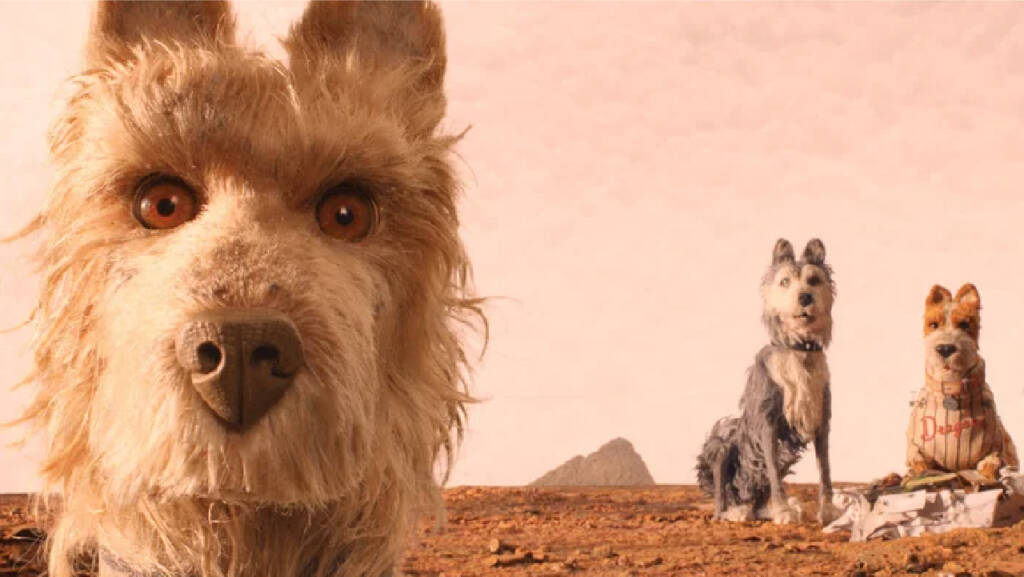
This was probably my favourite viewing of the week. I was particularly interested in the work of the graphic design team, including Annie Atkins and Erica Dorn, who eventually took over as lead graphic designer. The production contains a huge number of miniature newspapers, packages, labels, signs and documents, many of which are only briefly visible.
Details such as the dog tags, food packaging and material covering Tracy’s evidence board help establish the wider world beyond the main characters. For my project, this demonstrates how even small background graphics can contribute to the setting when they are treated as physical objects rather than flat decoration.
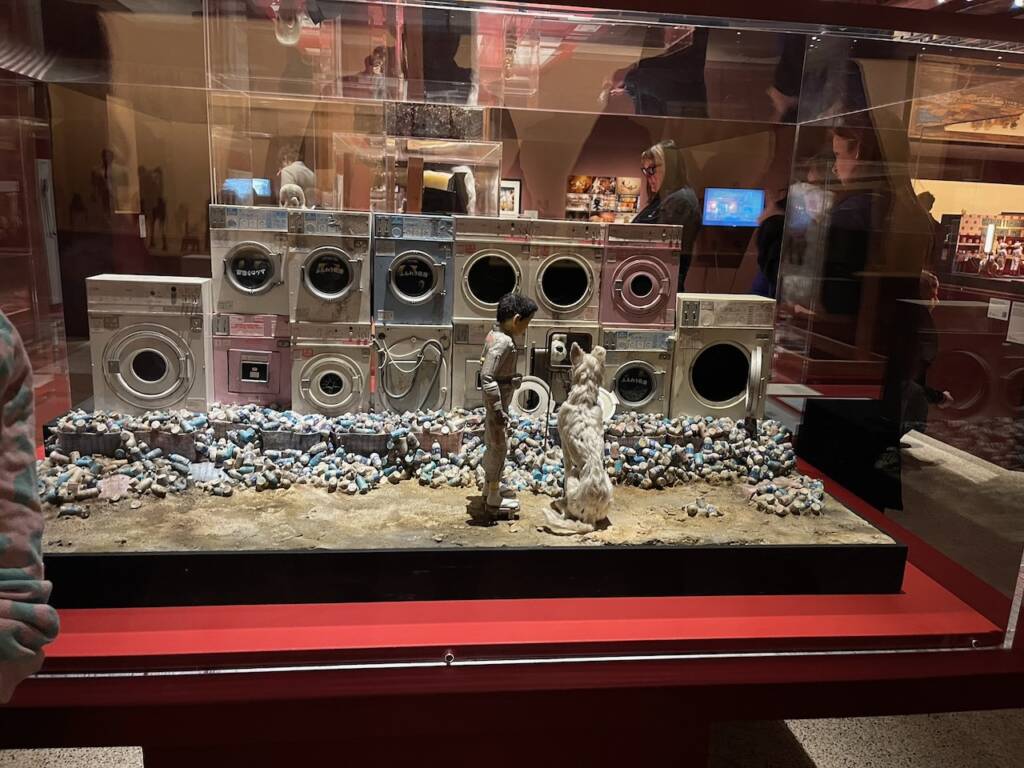
Isle of Dogs Set – Wes Anderson Archive Exhibition – The Design Museum London
My main takeaway is that every visible object in a stop-motion environment has to be selected, designed or physically placed. Even something intended to appear disposable, such as packaging or rubbish, becomes part of the production design. This makes me think more carefully about which objects genuinely require detail and how their condition might suggest a history without distracting from the main story.
Fantastic Mr. Fox (Wes Anderson)
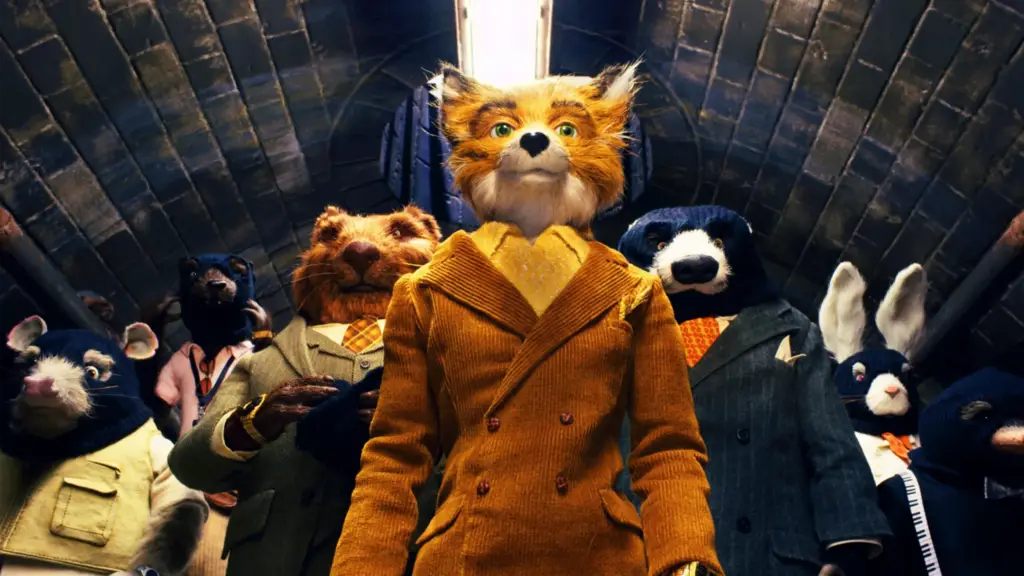
Fantastic Mr. Fox provides another useful example of tactile world-building. Materials such as fabric, fur, wood and textured paper remain visibly physical on screen, helping the environments feel warm and handmade. Rather than disguising every trace of their construction, the film allows some irregularity and material movement to remain visible.
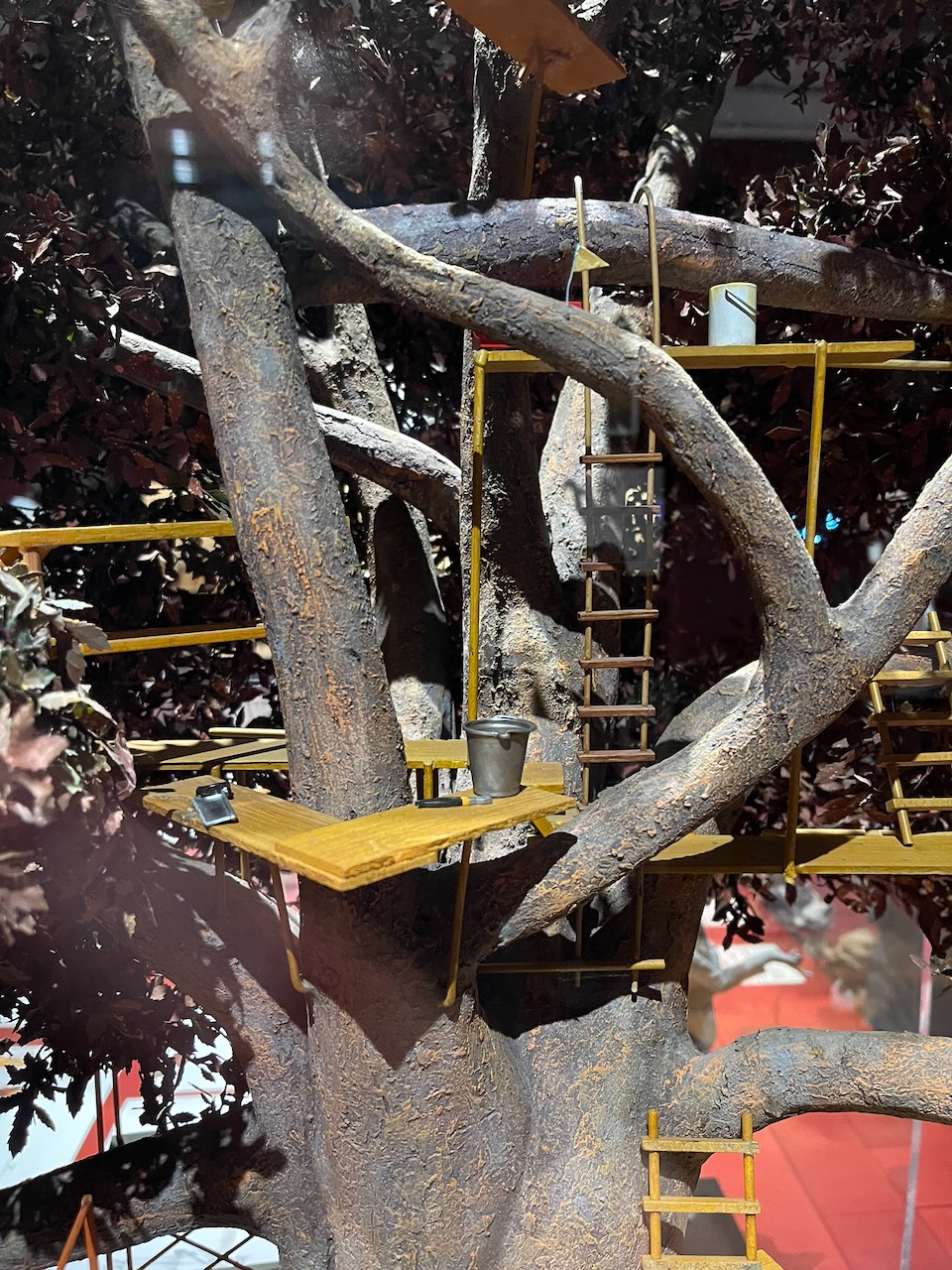
Fantastic Mr Fox – Treehouse Set – Wes Anderson Archive Exhibition – The Design Museum London
My main takeaway is that materials can contribute to the atmosphere of a scene before any dialogue takes place. For my own project, I need to consider how paper, fabric, clay and other surfaces behave under lighting and close-up photography rather than selecting them only for how they look off camera.
The Secret of Kells & Song of the Sea (Cartoon Saloon)
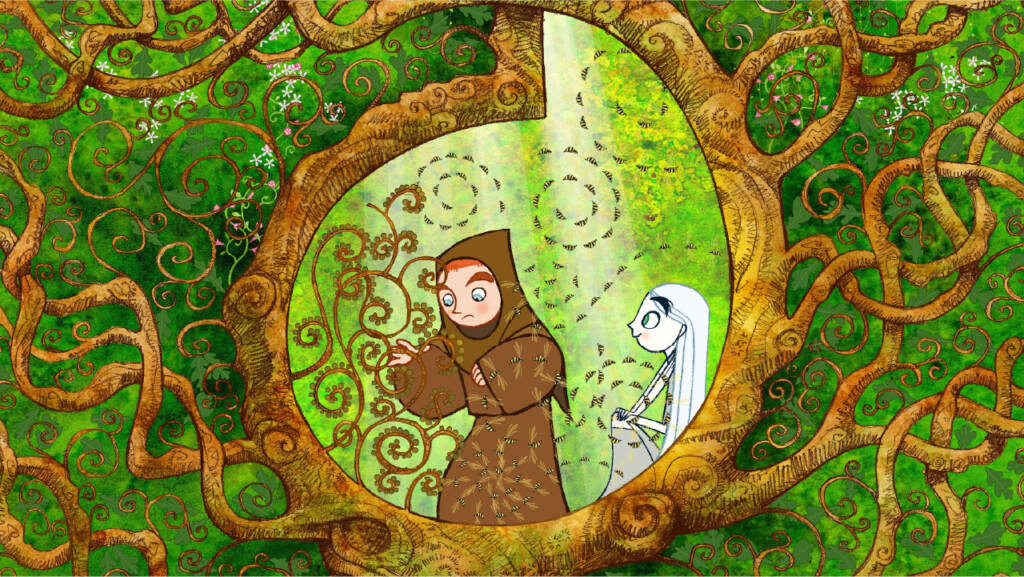
Although The Secret of Kells and Song of the Sea are 2D animated films, their use of shape, pattern and folklore provides useful visual inspiration. Both films build distinctive worlds through recurring colours, geometric forms and cultural references. This demonstrates how a clearly defined visual system can connect characters, props and environments even when the setting is highly stylised.
My main takeaway is the importance of internal consistency. I do not need to copy the appearance of these films, but I can establish my own rules for colour, typography, materials and shape. These rules could help the different elements of the proposed stop-motion world feel as though they belong together.
Kubo and the Two Strings (Laika)
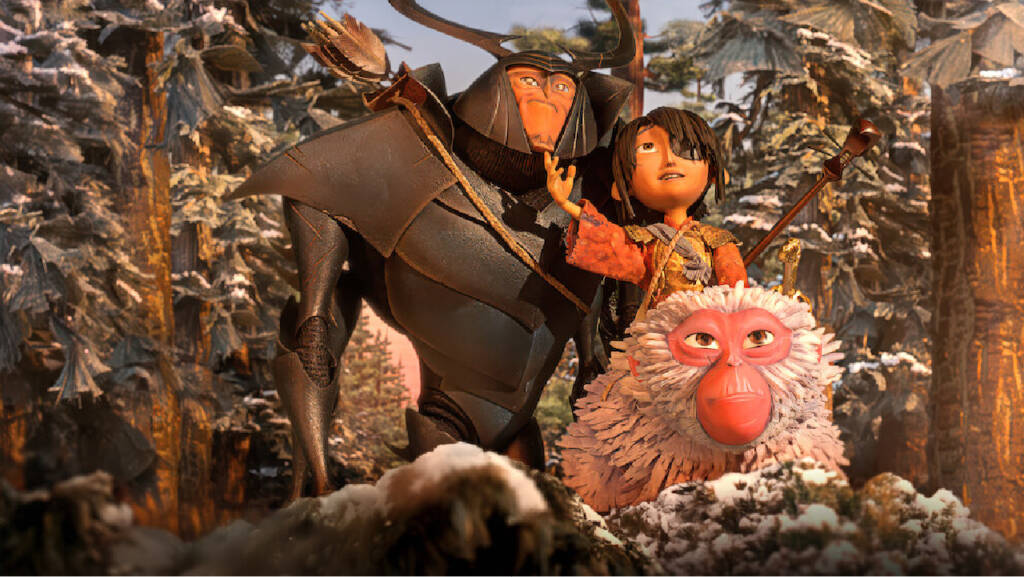
Kubo and the Two Strings is particularly relevant because physical objects are sometimes used as active parts of the story. The folding paper figures are not simply background decoration; their materials and movement have narrative significance.
This encourages me to think beyond producing static documents. A graphic prop might be handled by a character, damaged, unfolded, attached to part of the set or used to reveal information. I therefore need to consider what each prop does within the story as well as how it looks.
Yn Shenn Dooinney as ny Ferrishyn (The Old Man and the Fairies)
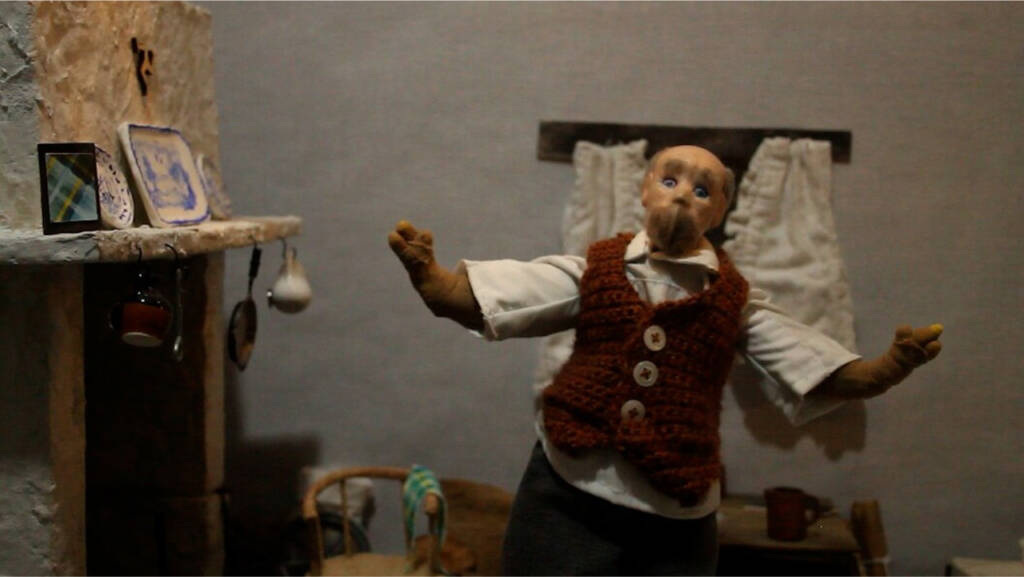
Yn Shenn Dooinney as ny Ferrishyn (The Old Man and the Fairies) is a recent stop-motion film created by Edge Hill University animation graduate Lily-Joy Lancashire in partnership with Culture Vannin. The story is described as a Welsh folk tale, but the project presents it through a Manx cultural and language context. Seeing another maker use stop-motion to engage with Manx culture makes it a particularly relevant reference for my project.
My main takeaway is that local heritage can be interpreted through contemporary physical making without requiring the scale of a major studio production. It also reminds me that I need to be clear about the source of the story I eventually select and distinguish traditional material from my own adaptation.
Project Definition and Formatting
Following this visual research, my current aim is to produce a short stop-motion film of approximately ten minutes based on Manx folklore. This is still a provisional decision, and I will need to test whether it is realistic within the time and resources available.
The graphic props and physical ephemera would receive particular attention, although the characters and story would remain central. Rather than trying to prove that detailed props always create immersion, I want to explore how their materials, construction and placement might contribute to the audience’s experience of the world.
Exploring Manx Myths & More
To begin selecting a narrative, I turned to Dennis W. Turner’s Manx Myths & More. The book presents stories from Manx history and folklore in rhyming verse alongside pen-and-ink illustrations.
I identified five stories that might offer different possibilities for a stop-motion adaptation:
- The Moddey Dhoo (The Black Dog of Peel Castle): A dark, atmospheric tale about a spectral hound. This would allow for heavy experimentation with lighting, cold stone textures, and tactile fur, creating a deeply moody stop motion environment.
- The Buggane of St Trinian’s: A story about a shape shifting ogre determined to tear the roof off a local church. This narrative offers fantastic potential for physical, tactile set destruction and the creation of oversized, grotesque props.
- The Phynnodderee: A tale focusing on a helpful but mischievous hairy sprite. This would allow me to focus on organic, natural textures like foliage, wood grain, and rustic farming tools, leaning into the raw materiality of the Isle of Man landscape.
- Manannan Mac Lir: The legendary sea god who cloaks the island in an impenetrable mist to protect it from invaders. This would be an incredible technical challenge, experimenting with stop motion mist, fluid sea textures, and ancient Celtic graphic props.
- The Fairy Bridge (Themselves): A charming story revolving around the strict requirement to greet the “Little People” when crossing their bridge. This narrative would be perfect for miniature, whimsical props, such as tiny handcrafted letters, magical elements, and delicate paper craft.
Next week, I will compare these five stories to see which provides the most manageable combination of character, setting and graphic props. I will also need to consider how much of the original story can realistically be communicated within the available production time.