Plan for the Week
- Refine my questions
- Choose a question to take forwards
Investigate each potential subject area further
Potential Question One
How can graphic design and motion-led narrative embody the fragmentation of memory and identity following emotional trauma?
Why?
This direction would explore how motion-led design might express fragmented memory, identity and emotion following trauma. Visual representations of trauma can easily become reductive, overly medicalised or reliant on familiar clichés. As the subject connects with some of my own experiences, it could provide a personal starting point, although it would require careful ethical and theoretical consideration.
What actions would I like to explore?
I would like to explore trauma and identity in a way that acknowledges that these experiences are individual. The outcome could reflect my own perspective, but it should not be presented as a framework that explains or represents everyone else’s experience.
What would I like to do and why?
If I included other people’s experiences, this would introduce additional ethical responsibilities around consent, vulnerability and interpretation. A safer initial approach may be to focus on my own experience and use published research to provide wider context.
What are the benefits?
Expression, creativity, mood, independent thinking and creation of work to potentially help understand situations or experience.
Thoughts
Although this question connects with my interest in mental health and psychology, it risks becoming too broad and personally difficult to sustain. It would also require stronger clinical and academic context than I currently have access to, particularly if I attempted to discuss experiences beyond my own.
The subject could potentially become emotionally demanding over a long project. This does not make it unsuitable, but it is an important factor when comparing it with the other direction.
Potential Question Two
How important is the accuracy of graphic props in filmmaking productions to the immersion of the viewer?
Why?
This question would explore how graphic objects within film and television contribute to the believability of a scene. It developed from my interest in film graphics and from seeing online discussions about anachronisms and production mistakes. I would like to investigate how designers approach historically set productions and whether viewers report being distracted when something appears out of place. This direction could also connect with my Manx heritage through the practical outcome.
What do I want to explore?
I want to investigate how viewers respond when a prop appears inconsistent with the period or fictional world. The coffee-cup example is broader than graphic design, but it demonstrates how an unexpected object can draw attention to the production itself.
What would I like to do and why?
I want to gather perspectives on graphic props that appear consistent with a production and those that appear noticeably out of place. Rather than assuming that accuracy always creates immersion, I want to ask how much these details matter to different viewers.
Thoughts
I think this could be a deeply interesting project and gives plenty of scope to what to actually create for the production side of this module. I think there will be plenty of references and topics to explore with situations that immersion has either been more or less successful. It’ll be interesting to see opinions on whether people really care about this or if it’s something that is more unique to a few.
Choosing a subject
Both directions connect with my interests and could sustain a longer project. However, the second question feels more manageable and connects directly with my interest in graphic design for film and television. The trauma direction would require a more specialised ethical and clinical framework, while graphic props provide clearer opportunities for practitioner research and physical experimentation.
Exploration of Subject
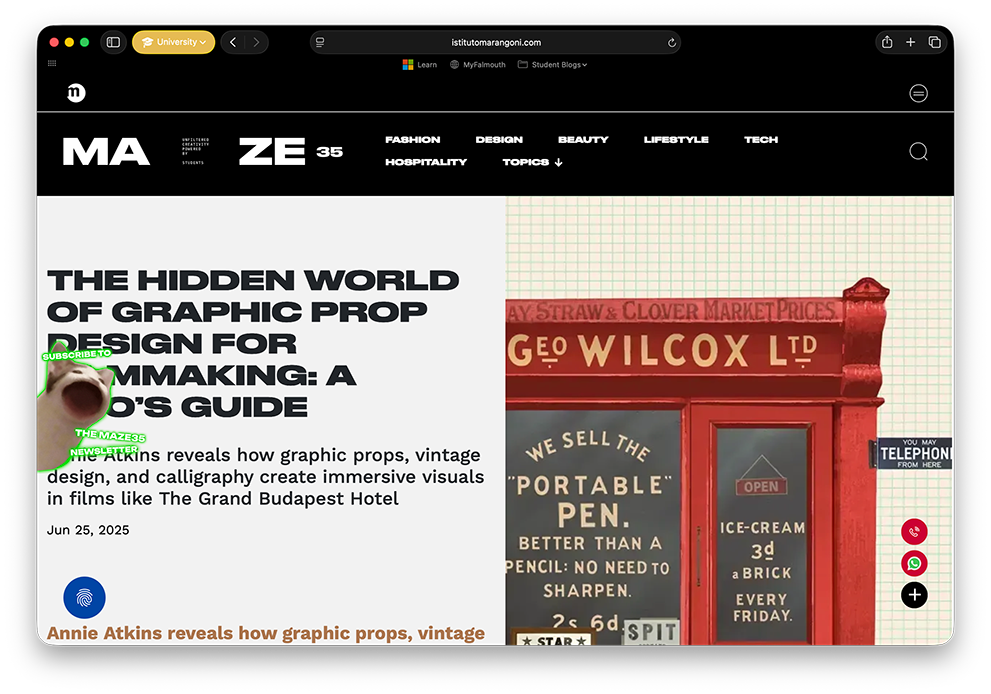
Interview with Annie Atkins – The Hidden World of Graphic Prop Design for Filmmaking
“Authenticity in graphic props helps maintain immersion, convincing the audience they have been transported to another time and place.”
This interview introduces the relationship between research, physical construction and the believability of film graphics. It supports the direction of my question, but I will need to examine the complete source and compare it with other practitioner and academic perspectives rather than relying on a single quotation.
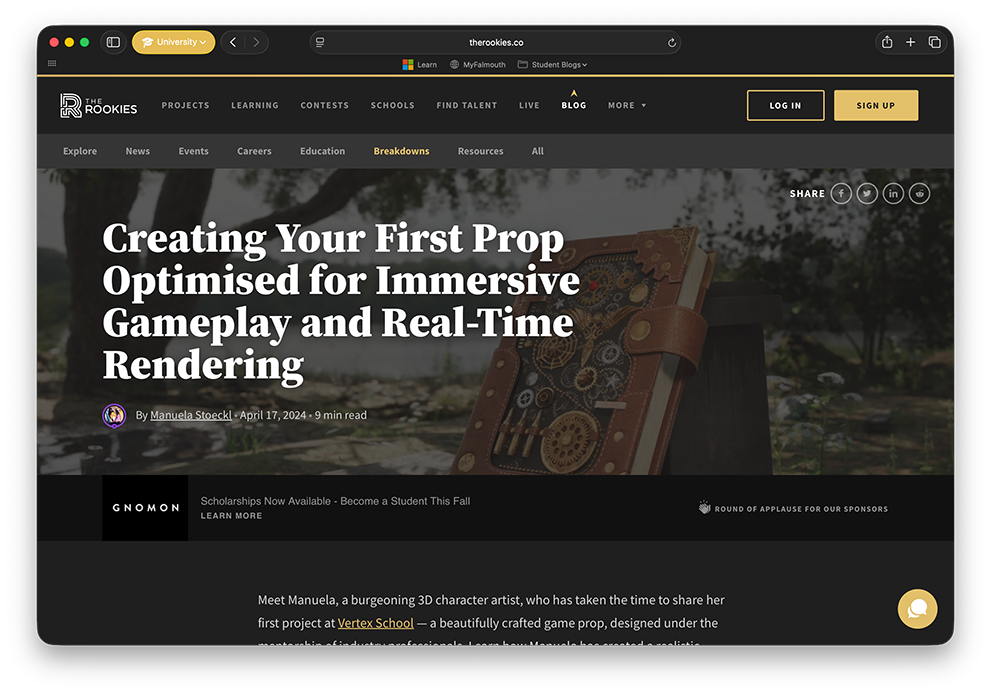
Prop Optimisation for Immersive Gameplay
Although this article deals with immersion within gaming, it takes the important theory of how something that in this case, a player interacts with can be integral to the immersive nature of a video game. As said, this article is based around video games, it shows an important reflection of how something viewed in a set time period, such as a medieval setting, should feel authentic and appropriate to its environment and how something that doesn’t feel ‘right’, can break the immersive nature of media and entertainment.
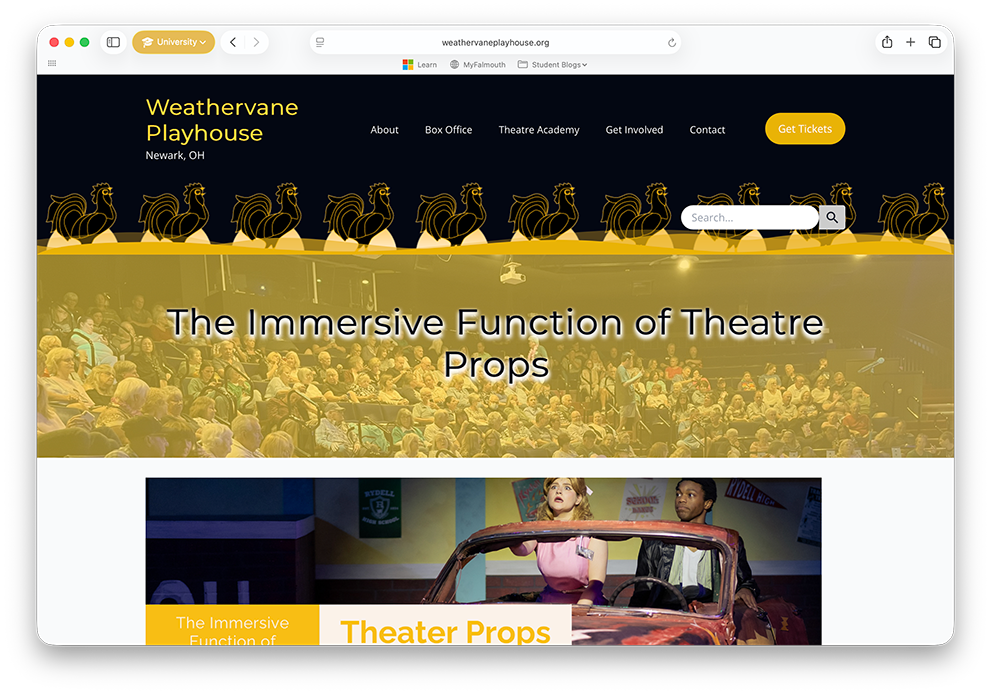
The Immersive Function of Theatre Props
https://weathervaneplayhouse.org/the-immersive-function-of-theatre-props/
This article speaks about the function of theatre props for audience immersion. I believe theatre to be a very close format to the subject I’d like explore even though it’s live and seen in person, i think it still interestingly approaches the subject in committing the audience to immersion of what is going on on stage, it includes a quote that I particular liked;
“A great prop cannot save a mediocre scene, but a bad prop can ruin a great one”
The statement connects with my developing question, although it represents a practitioner opinion rather than evidence that one prop can determine an audience’s response to an entire scene.
Thoughts
Even this initial search has identified several possible sources and related fields. This suggests that the topic is viable, but I will need to evaluate the quality of the sources, verify quotations and distinguish practitioner commentary from academic research.
Additional Research
Some other things I’d like to explore for the research behind this project are books and events on this subject. I already own Annie Atkins’ book ‘Fake Love Letters, Forged Telegrams, and Prison Escape Maps: Designing Graphic Props for Filmmaking’ which includes invaluable insight into the process behind designing for TV & Film. I also want to explore more articles and ideally reach out to people in the industry for their views and opinions on this subject.
Refine my Question
From my initial look into potential research, I wanted to try and refine my research question and which is best to approach.
How important is the accuracy of graphic props in filmmaking to the immersion of the viewer?
How do graphic design styles of the 1920s and 1930s contribute to the visual language of period cinema
Do authentic, physical graphic props actively assist actors in getting into character on a film set?
To what extent do tactile graphic props and period accurate ephemera drive narrative immersion in motion pictures?
Does the physical, tactile nature of hand-crafted film ephemera create a stronger sense of realism than digitally printed props?
Does using original productions methods in set and prop design create a more authentic immersion when viewing tv and film productions?
To what extent do typographic anachronisms and design errors in film props actively break a viewer’s suspension of disbelief?
Thoughts
These questions approach similar territory from different angles. The question about original production methods would allow me to explore signwriting, printing and fabrication, while the ‘tactile graphic props’ version provides a broader scope. At this stage, it appears to offer the strongest balance between material practice, film graphics and audience research.
How might I do it?
I plan to learn more about graphic-prop production through books, articles and practitioner interviews. I also want to gather exploratory audience responses about moments when a graphic detail appeared convincing or noticeably out of place. If possible, I would like to speak with working designers about how these challenges change across genres and historical periods.
Who is this for, who is my audience?
I think my audience for this is people who have an interest in learning more about TV and film, and even people like myself who wish to work in a career such as this and want to explore the important aspects of this area of graphic design.
What are my aims, objectives and purpose?
I want to explore the role of graphic props within filmmaking and learn directly from practitioners working in the field. The practical outcome could be a short film, a proof of concept or a selected group of functional graphic props. The wider purpose is to develop my knowledge and experience of graphic design for film and television.
What framework will I use in my project?
I currently plan to combine primary and secondary research. The primary research could include practitioner interviews and an exploratory audience survey. Secondary research will include books, articles, existing interviews and film case studies. A visual comparison between a historically informed prop and a deliberate anachronism is another possible method, although its design would need to avoid leading participants towards an expected answer.
How might I investigate my research question?
The project could combine qualitative interviews, quantitative survey questions and optional written responses. Online discussions and IMDb entries may help identify possible case studies, but they will need verification. I also want to analyse selected films and consider how particular graphic objects contribute to their fictional worlds.
What has happened in my chosen area of research already?
Although there may not be a lot of research specifically on this subject, as I’ve said above, there are plenty of resources for views and opinions on this subject and I can bring these together to look into my research question.
What connections can I make?
Ideally connections to people already in the industry to share their views and opinions.
What research methods could I use?
I don’t believe I’ll be able to use quantitative research methods on this too much, however one area I could look at is discourse online at when things go wrong, like mistakes made in productions that people have noticed and their views and opinions shared on sites such as IMDB for example. As stated above, primary and secondary research will be invaluable. I also want to look at a few of my favourite designers and filmmakers’ productions and select substantiation moments or items that really ‘sell the world’ within these projects.
How will my project benefit me and others?
The process should develop my understanding of graphic-prop design and support my longer-term career interests. It may also provide other designers with a documented example of how research, physical making and reflection can be combined. I should avoid suggesting that one inaccurate prop will always make or break a scene, as that will depend on the viewer and context.
Next Steps
Over the next week, I want to refine the methodology and establish a clearer research plan. Now that I have selected a provisional question, the next stage is to bring the sources, methods and practical possibilities into a manageable structure.
Reference List
Coscia, C. (2025) The hidden world of graphic prop design for filmmaking: A pro’s guide. [online] Available at: https://www.istitutomarangoni.com/en/maze35/design/the-hidden-world-of-graphic-prop-design-for-filmmaking-a-pros-guide
Stoeckl, M. (2024). Creating Your First Prop Optimised for Immersive Gameplay and Real-Time Rendering. [online] The Rookies. Available at: https://www.therookies.co/blog/breakdowns/prop-optimised-for-immersive-gameplay-and-real-time-rendering
Harvey, L. (2026). The Immersive Function of Theatre Props. [online] Weathervane Playhouse. Available at: https://weathervaneplayhouse.org/the-immersive-function-of-theatre-props/